
Week 7 - The Food Activist Toolkit
Welcome and Introduction
[A note on watching the recording – as this week we did a lot of thinking and had a studious approach to the workshops the recording is not as interesting as usual weeks. Also, for some reason the video is not on the recording – I think due to screen sharing function? So it really is only interesting to listen to, not watch – in this write up I have noted the times different sections or discussion start at.]
Heather & Chris W spent some time this week pulling together the write ups from each of the weeks to create a draft version of the toolkit. As a group we utilised ‘jam boards’ to share feedback on the toolkit, and we spent some time going through each section within the draft version of the toolkit to share ideas, thoughts (positive and negative), and improvements.
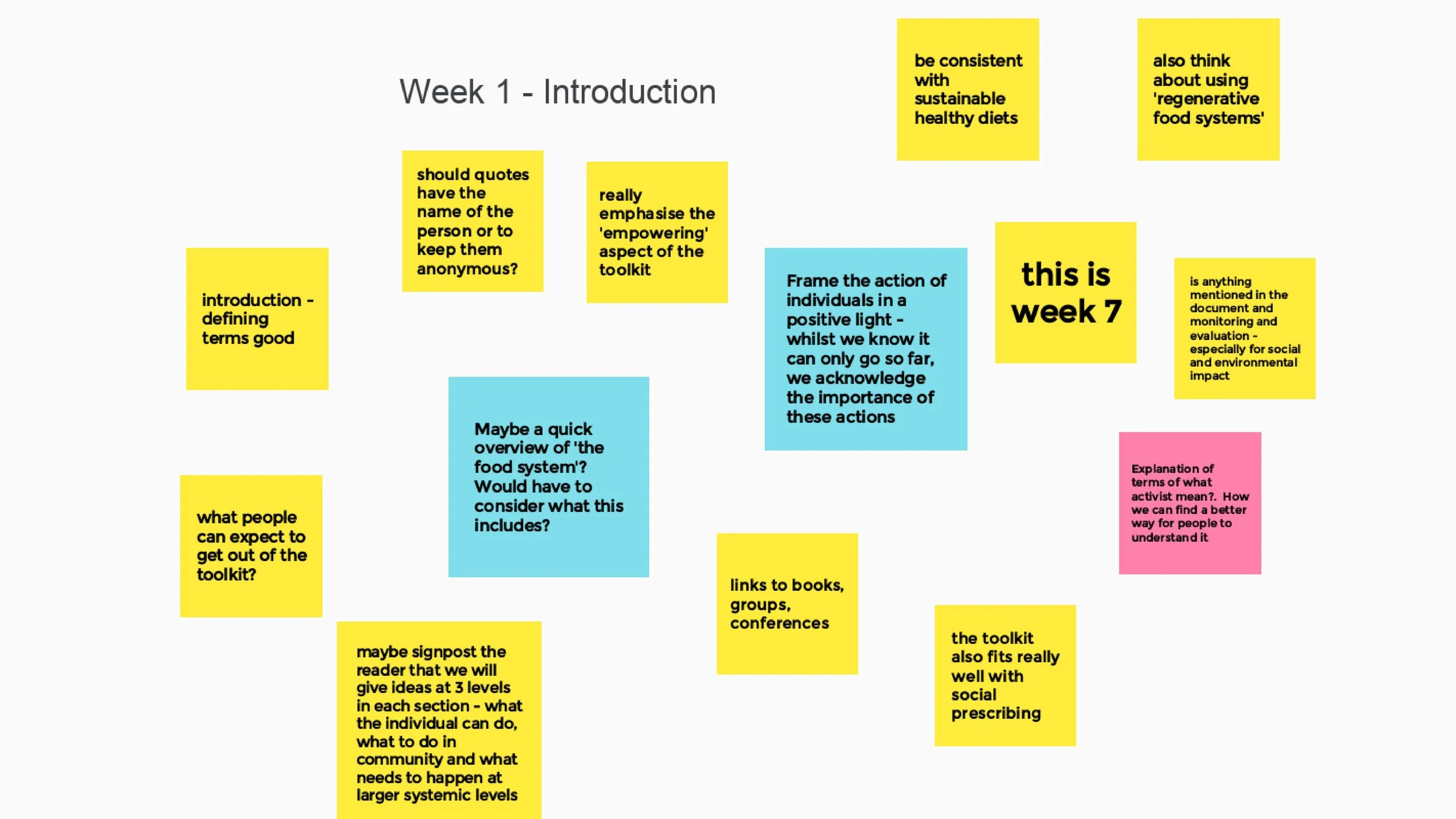
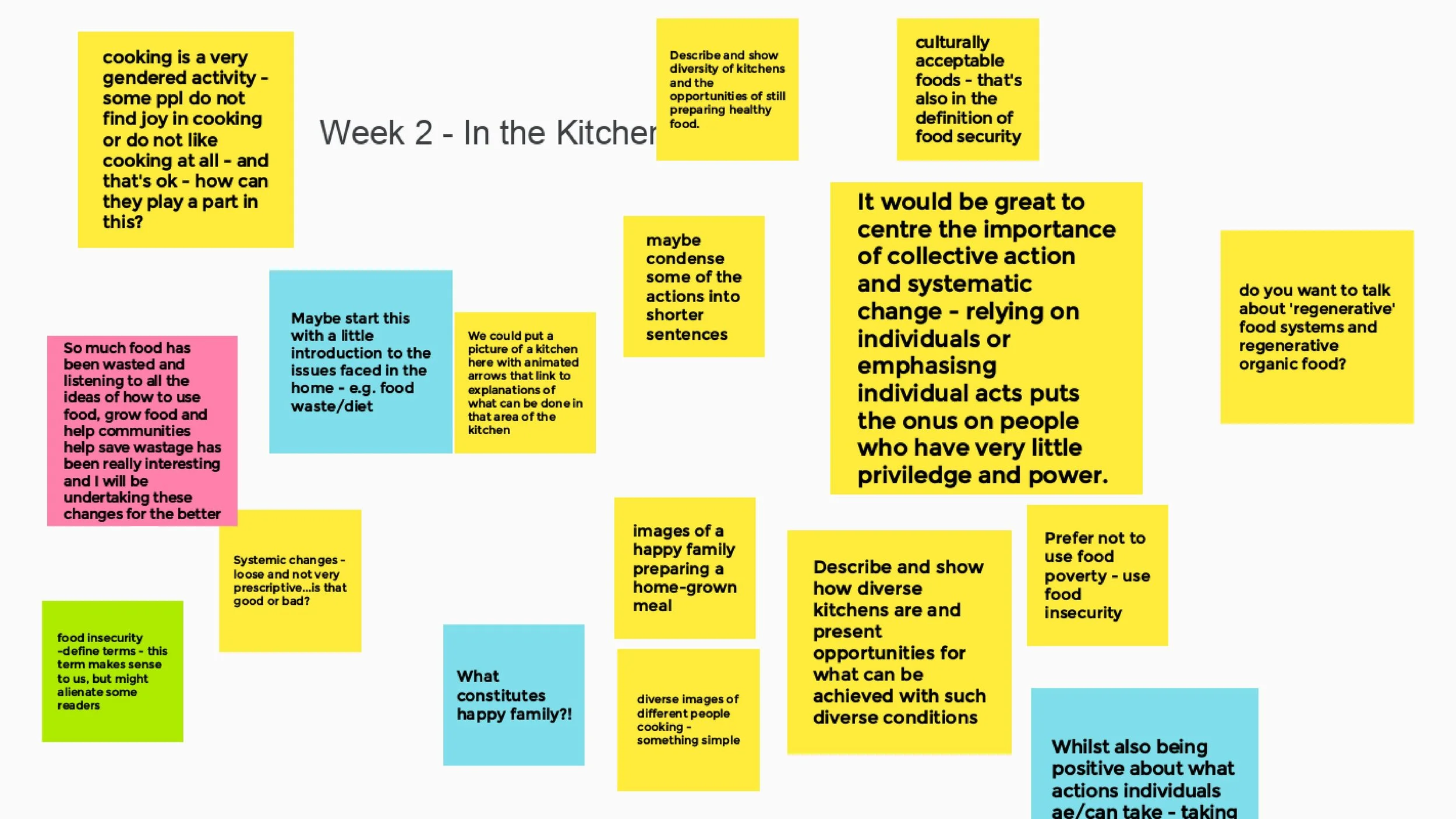
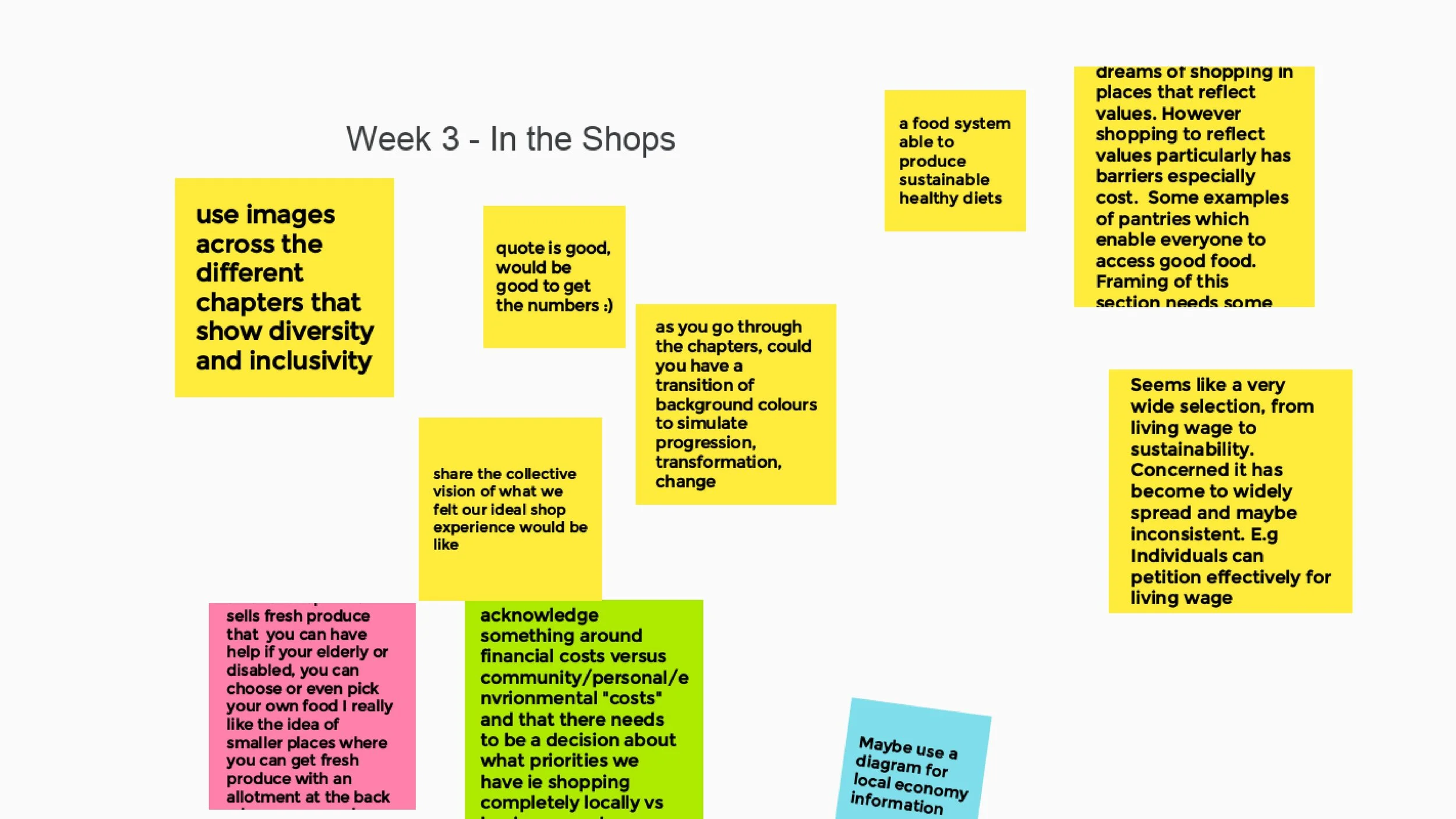
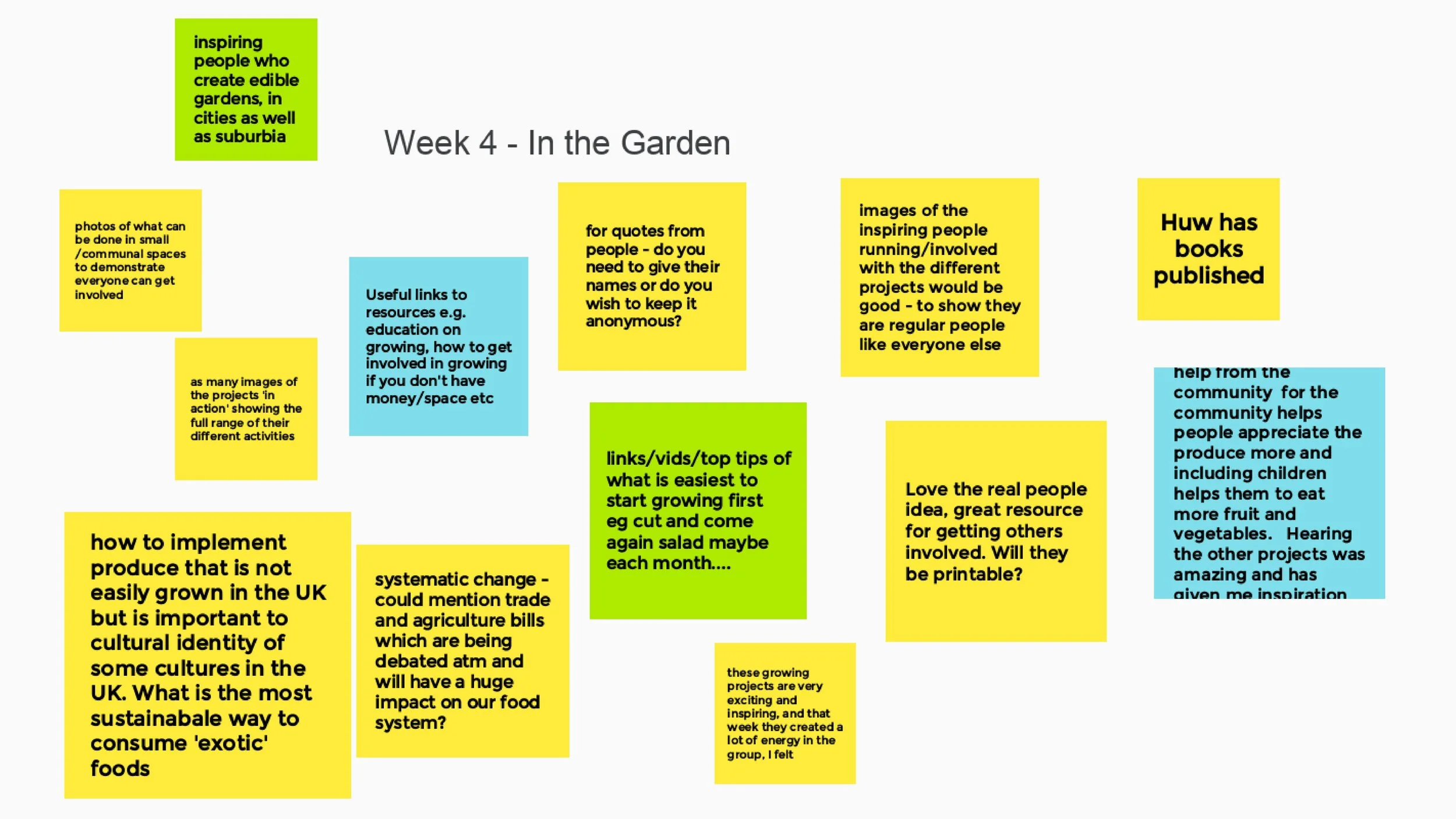
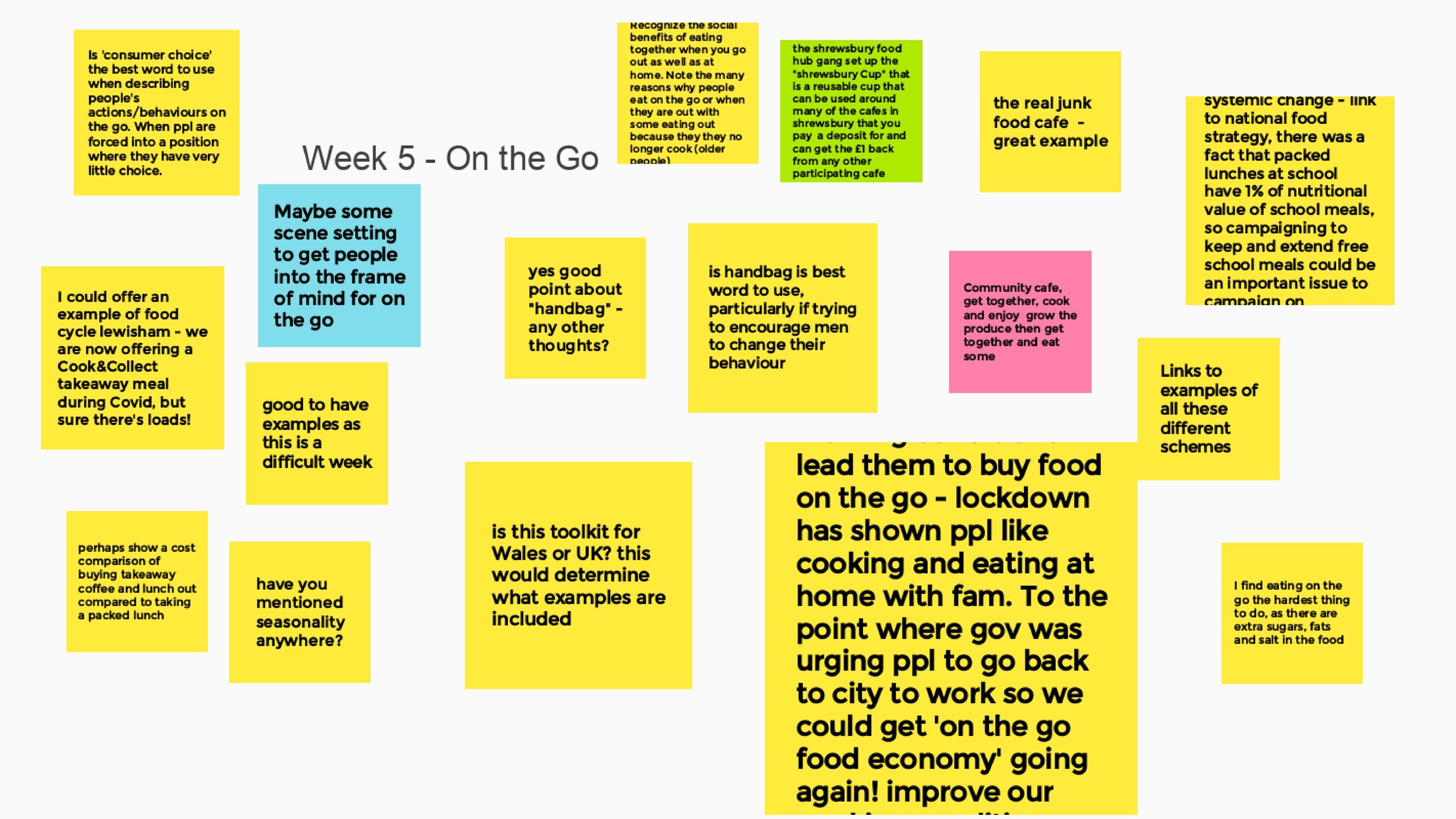
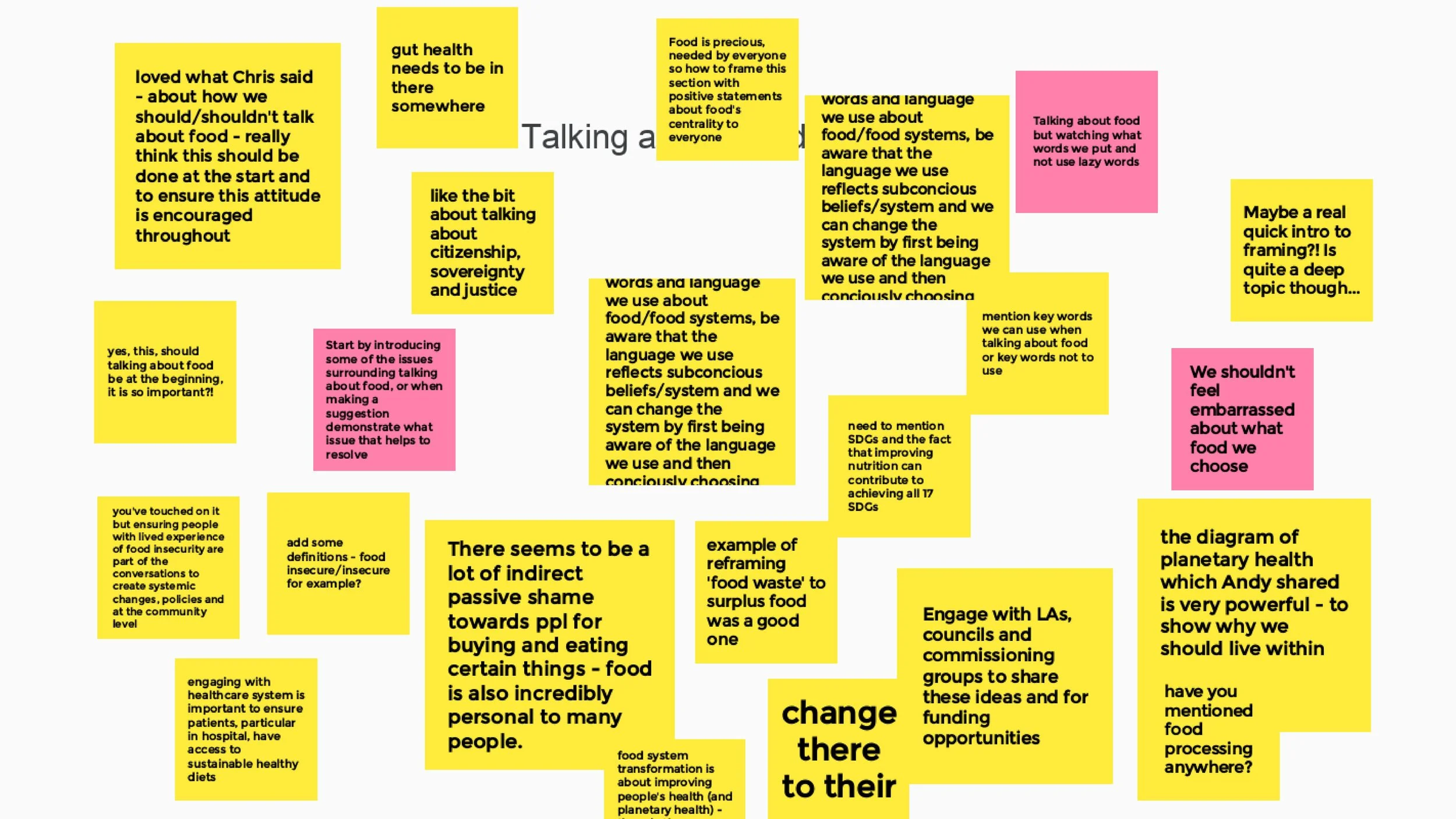
Heather and Chris will take these ideas and re-shape the toolkit based on this feedback. We will schedule time in the future to go over these and finalise, and work with a graphic designer to develop the toolkit in to an attractive and engagement format that is user friendly.
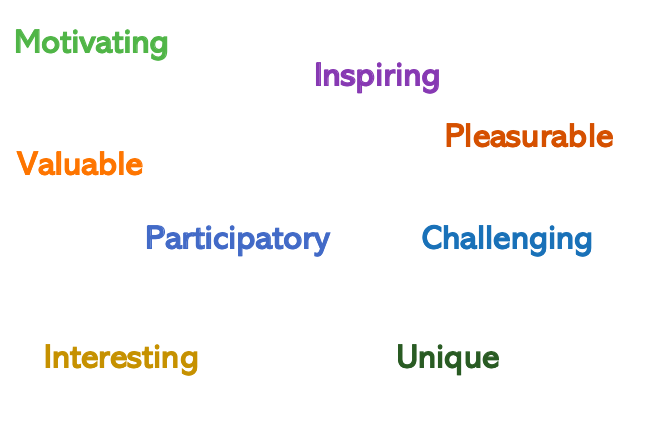
Our ‘one words’ to describe our experience of the course (time)
How are we going to utilise the toolkit moving forward - action ideas (time:)
How do we see ourselves using the toolkit?
- is it a tool to engage people rather than a toolkit for actions? Is it a toolkit for how a school for example can run the course, and have activities each week they can do
- Is it many things
- Everyone can be an advocate for the toolkit
- After inspiring speakers / workshops it can be shared – can we do workshops/talks about it and share it
Do we see ourselves sharing it with others and building on it?
- With conferences:
o The permaculture convergence
o WRFFC – how can we share it here (in a month)? Host a session at the conference like the participatory methods
o The ethical consumer week
o ORFFC
o NRFFC
- Sharing the methodology & the radical participatory approach, everyone could come and join in creating the toolkit no matter their background
- Sharing with Universities and student societies
- Please share with Dr Mike Hardman at Salford University who is a geographer and supports 'radical' community food growing and guerrilla gardening, community farms, social prescribing
- The different Social Prescribing networks in the UK, particularly the Welsh Social Prescribing research network would like this.
- Share it with dieticians and community
- Share it with the Poverty Truth Commission
- Share it with Sustain and other networks
- Share with the Wales Community Food Growing Network
The format?
- To frame the toolkit right at the start – set the tone “there is no shaming of choices”
- This is a constantly evolving toolkit: it is alive and a working document that is not finished
- Ensuring everyone’s voices are showcased throughout the toolkit: ages, backgrounds etc. diversity so as not to alienate people
- One minute it is talking about sustainability – then talking the idiots guide – it needs to be one or the other, or 2 separate documents – this gives different ways for people to engage from different perspectives
- Accessible to all; then doing ‘tailored’ versions for different sectors eg. People who work in the community / people who work in science / people who work with cars etc.. XYZ….
- PDFs to click through / newsletters? Sharing stories !
- Get Andy Middleton back in to ask him if he can do an adapted one for schools / a dr, can they do one for universities or hospitals / for a social prescriber etc.
- With a reading list – as a way of finding out more information
- Videos
- Vignettes – photos and snapshot stories – bring the toolkit alive
- An audio version or braille version to make the toolkit as accessible as possible (a recommended link: https://support.microsoft.com/en-gb/office/improve-accessibility-with-the-accessibility-checker-a16f6de0-2f39-4a2b-8bd8-5ad801426c7f?ui=en-us&rs=en-gb&ad=gb
& https://www.adobe.com/accessibility/products/acrobat/using-acrobat-pro-accessibility-checker.html)
- Emphasising the participatory methodology
- Having ways to record engagement / achievements / journal etc
- Graphic designer
Acknowledgements:
on the document, you need to acknowledge that this is the brainchild of Heather, Chris, Chris
yes Elizabeth brainchild comment true
This toolkit was created by Chris Heather and Chris who then gathered X, X, X, X together to create this document
Yes and activity - what have we learnt or enjoyed about the course
I loved the talks and language reflections, I am a food citizen not a food consumer, Yes and…, I loved the opportunity to reflect on how I engage with food and the food system, Yes and…, I have learnt a lot about using food and how to deal with food, and I am a food citizen now, Yes and…, I have enjoyed the course and the learning experience through an online platform from lots of locations, Yes and…, It has been very interesting to hear different ideas and how I can use those in the different levels of government and general public that I interact with to turn them in to food citizens rather than food consumers, Yes and…, I am grateful for being encouraged to reimagine how we can solve the issues surrounding food and for all the limitations to the situation being removed, Yes and…, I have had a really pleasurable experience to meet everyone and I feel humbled by everyone’s input and connection and learning from everyone, Yes and…, I have really enjoyed the last 7 weeks and I will miss it as a high spot of the week, meeting the same people and learning a lot of new things to help me be a better food citizen and food activist, Yes and…, [Chris W.] – my internet cut out for yours !!