
Week 6, Talking about food
Welcome and introduction
Our favourite food experiences of the week
Speakers
Chris Byrne (Aber Food Surplus & The Food Conversation)
- Food is more than calories; we connect emotions and feelings to it (eg. Celebrations, showing love and finding comfort)
- Talking about food activism means we need to involve everyone in conversations over the food system change
Problematic Language:
- Talking about food negatively (eg. Dirty food / guilty food) affects our wellbeing and connection to food – eg. Diets etc frame food as needing to be earned and not enjoyed
o Often this can become classism or poverty shaming
o Can cause offense and neglect peoples backgrounds
o Demonising food can turn people off
Food Education - who can talk about food
- Needs to be started young, but many adults haven’t had the opportunity to engage with food and the food system, everyone needs the opportunity for food education
o Nutrition and wellbeing
o We need to create spaces to talk about food for everyone (safe, accessible, convenient)
- Without access to food education food conversations are often then held by people who already know about food systems
Food Values
- Our core values lead to decision and choices we make over food
- Can inspire how we frame the work we do
o Aber Food Surplus (AFS) – Experienced the frame that food surplus/waste is being used to tackle ‘food poverty’, this expects the vulnerable to rely on the fluctuating supply of food and AFS found this unpleasant and not a solution. Therefore, use food surplus to host community conversations, utilise the food surplus to reduce waste and find solutions.
o How do we talk about food poverty? Food insecurity? Not poor but struggling – inadequate income. Food poverty is an injustice, not down to how hard anyone works.
Andy Middleton (Now Economy Partners)
- Best conversations always take place on the edge not the middle
- Biggest decisions are made at government level, where spending is determined by risk
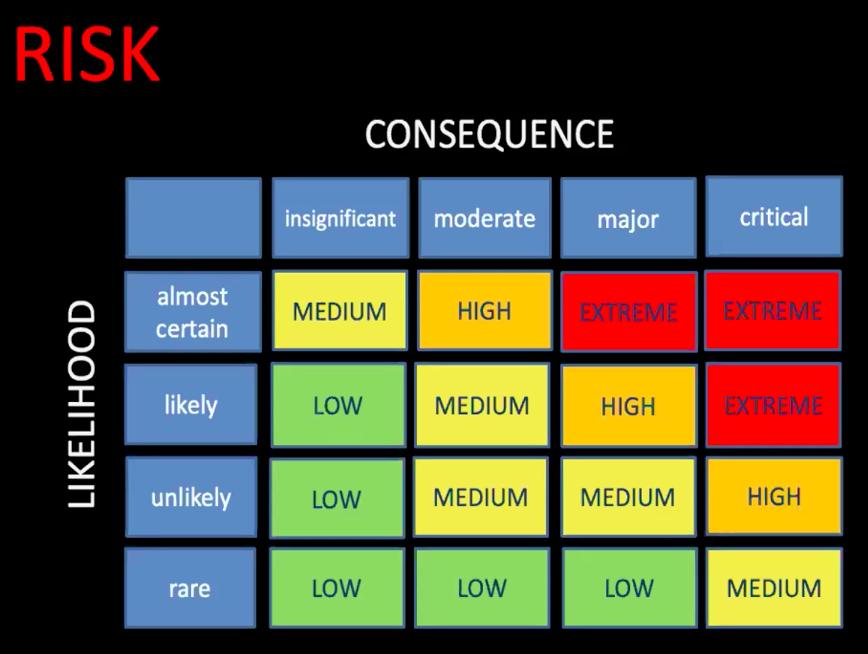
o All environmental risks are being treated as if they are ‘rare’ and ‘insignificant’ not as they are which is ‘almost certain’ and ‘critical’(see diagram). The risk of reaching a rise in 2.5 degrees is almost certain, but there is no plan to deal with it, not even as a medium risk.
o Therefore, helping people understand risk will help them understand how serious the situation is: Species loss of mammals, losing a quarter of our plants and animals; 90% of social degradation and 60% with loss of soil fertility. Plastic.
o Diabetes – costs Wales £1bn / year. In the worst areas 10% of the population as a direct relationship to diet.
o Food waste / food poverty – distribution challenges to be overcome
- If people paid the full price for environmental damage most things would not be profitable. Not one country lives within planetary limits (Kate Raworth donut economics).
- Fostering R10 – how to do this everywhere?
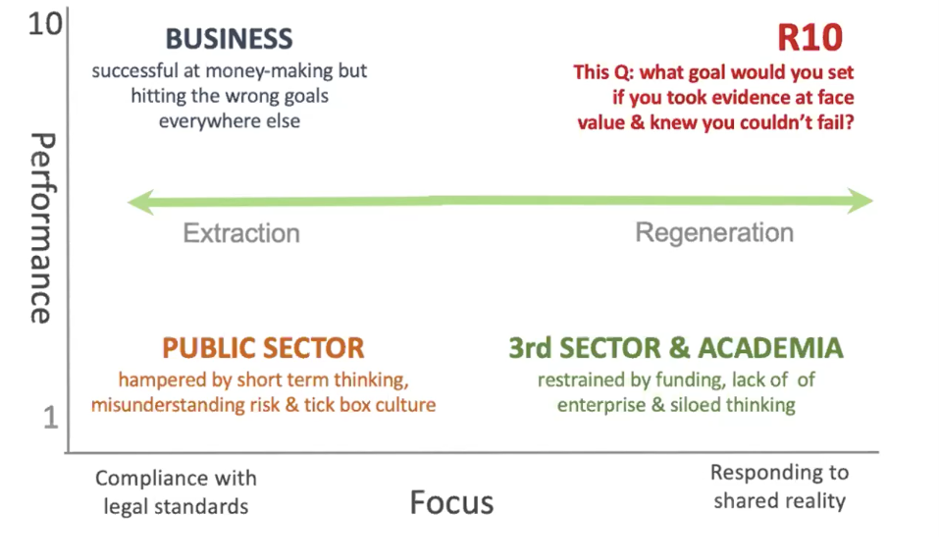
- CSR / EVG not meeting the R10 – must have a regenerative approach and internalise environmental costs, but there are no metrics
- Connect the dots / build holistic approach by bringing together all sectors:
o NFU will support spaces to grow for school children in Wales
o Food literacy education in primary schools
o Certificate in planetary health for cross sector engagement
How we frame access to food: Citizen or Consumer
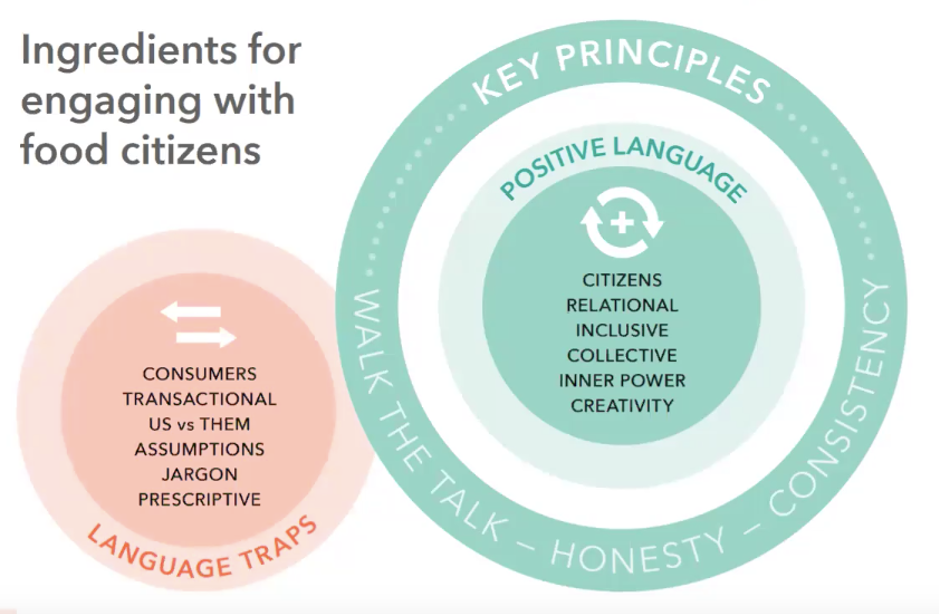
Putting food citizenship in to action: How Aber Food Surplus are working towards facilitating food citizenship through our approach:
- Values & Ethos: Honest, Open, Fair, Inclusive and Ambitious – Happiness, Community & Creativity
- Supporting affordable access to organic and local food – eg. £5 local/non chemical veg boxes, as well as lots of choice
- Surplus selection boxes - Pay as you feel surplus food boxes
- Engaging community with food through events, discussions, meals and movies, promoting community knowledge sharing, access to a kitchen, and hosting community consultations.
- Working towards a ‘flat structure’ and using food waste as a community resource through volunteer empowerment
- Engaging with food poverty through promoting an environmental ethos and supporting an environmental ambition to encourage people in supporting the project, creating a choice over a get what your given system, pay as you feel with money, time, skills or whatever you feel.
Discussion from breakout groups:
How can you facilitate food citizenship, or be a food citizen?:
- The word citizen is alienating, and citizens might feel like the word is disempowering because citizens don’t have any power
- Preference for the word food activist or food actionist, but maybe many words are alienating
- There is behaviour change that starts at home, and then there is community empowerment where we share that and how it contributes to a bigger picture
- Using the best language, language frames things, need to change the language we use - Language is vital
- Talking to people you wouldn’t normally talk to
- Asking more people, what would the future look like if every child was food literate, what would it do for a nation’s health?
- Tackling the root cause of the problem, rather than the symptom, in a collective and collaborative way
- Everyone should have more food knowledge – trainers, 10 hours a year
- Reimagine our food distribution system
- Stop putting responsibility on people in poverty to get themselves out of poverty by 'cooking cheap food'. Make cooking less daunting. Teach people to be able to cook and make their own food. But there should be no pressure on cooking!
- Also, teaching basics (like how to boil pasta) with no judgement.
- Communal gardening, which is more fulfilling - chance to share knowledge, time and experiences.
- Being in spaces with others may cause anxiety - get creative about how we can share knowledge and experiences. We have been doing a lot online recently!
- Document what you grow and cook and share - to share knowledge
- Formidable Vegetable Charlie Mgee Australian Permaculture band
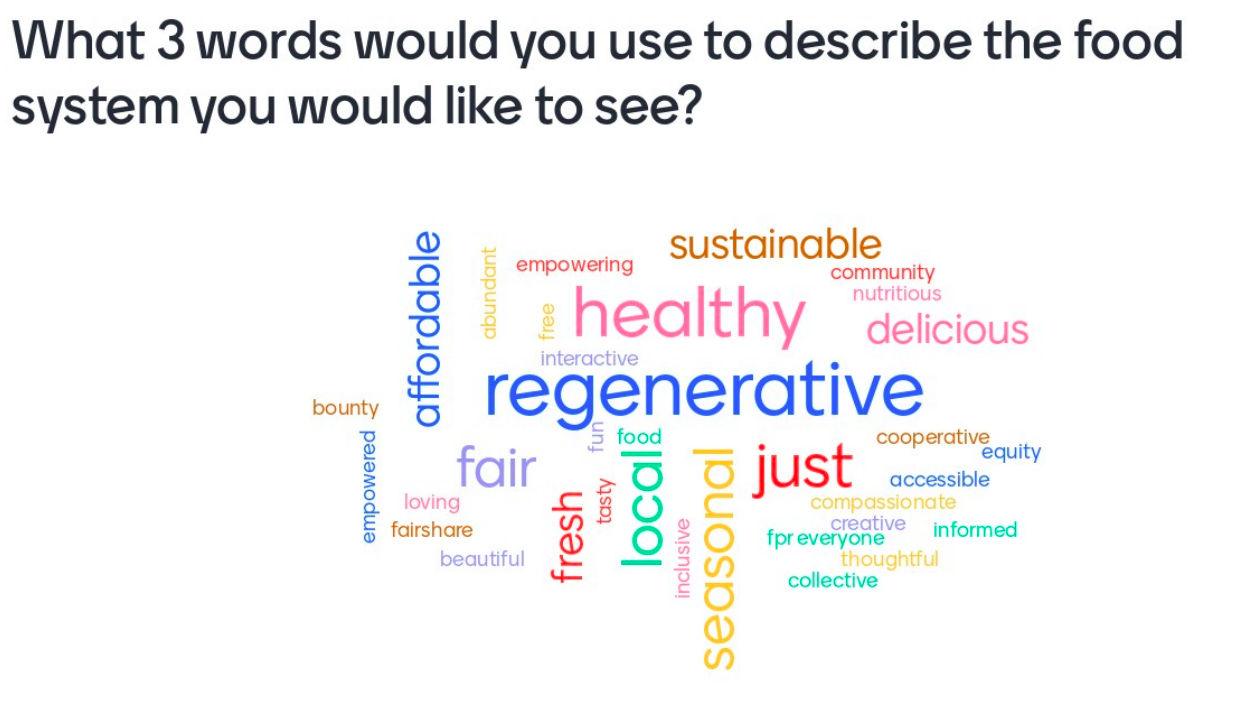
Attribute of the week:
Holisitic, inquisitive, inclusive